If you've ever felt like the room was spinning even though you were standing perfectly still, you already know how disorienting vertigo can be. I've talked with a lot of people who didn't even realize what they were experiencing had a name — they just knew something seriously off. Whether you had one scary episode or you been dealing with this for a while, I want to walk you through the most common questions people have about vertigo, because understanding what's happening in your body is honestly the first step toward feeling better.
What exactly is vertigo, and is it the same as feeling dizzy?
This is probably the most common mix-up I hear about. Dizziness is a broad term that can mean lightheadedness, feeling faint, or just being unsteady. Vertigo is a specific type of dizziness where you feel like you or your surroundings are spinning or moving when nothing is actually moving. It's typically caused by a problem in your inner ear or, less commonly, in your brain. So while all vertigo involves dizziness, not all dizziness is vertigo. The distinction really matters because the treatment paths are different.
What are the most common symptoms of vertigo?
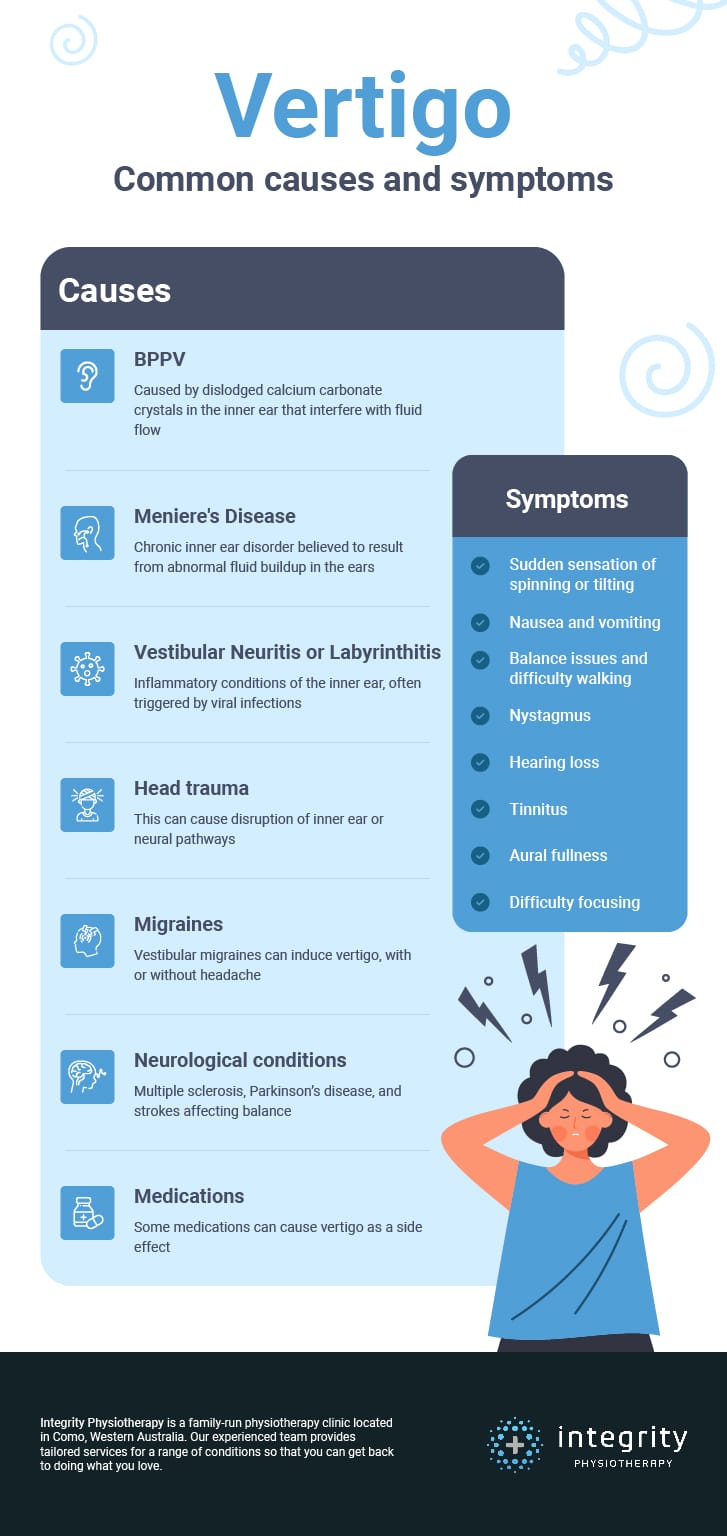
Beyond the hallmark spinning sensation, vertigo often comes with a whole package of symptoms that can be pretty alarming if you don't know what's happening. These include nausea and vomiting, abnormal eye movements called nystagmus, a of fullness or pressure in the ear, ringing in the ears (tinnitus), hearing loss in one ear, difficulty balancing or walking, and sweating. Some people describe it as feeling like they're on a boat that won't stop rocking. Episodes can last anywhere from a few seconds to several hours depending on the underlying cause.
What causes vertigo in the first place?
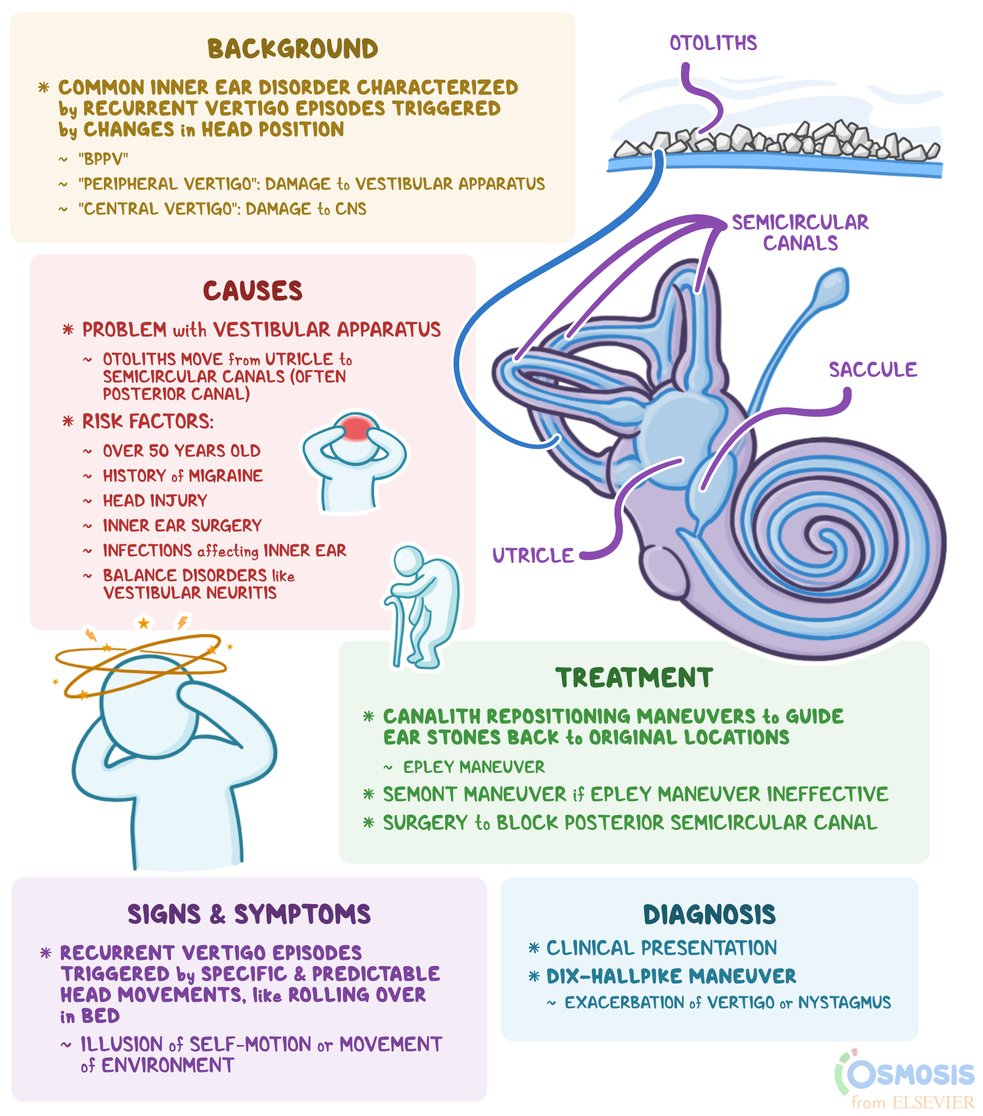
The most common culprit is something called Benign Paroxysmal Positional Vertigo, or BPPV. This happens when tiny calcium crystals in your inner ear get dislodged and move into the wrong canal, sending mixed signals to your brain about your body's position. Other frequent causes include Meniere's disease, which involves fluid buildup in the inner ear, and vestibular neuritis or labyrinthitis, which inflammation-related conditions often triggered viral infection. Less commonly, vertigo can stem from migraines, head injuries, or problems in the central nervous system like stroke or multiple sclerosis.
How do doctors diagnose vertigo?
Diagnosis usually starts with a thorough conversation about your symptoms and medical history, followed by a physical and neurological exam. One of the most useful tests is the Dix-Hallpike maneuver, where doctor moves into specific positions to trigger and observe eye movements. Depending on what they find, you might also get an MRI or CT scan to rule out central causes hearing tests, balance assessments. There's no single test that diagnoses all forms of vertigo, so the clinical picture matters a lot.
Isigo something that goes away on its own?
In many cases, yes — especially with BPPV. A lot of people have one bad episode and then don't experience it again for months or years if. The inner ear is actually good at compensating over time. That said, conditions like Meniere's disease tend to be chronic require ongoing management. Vestibular neuritis can linger for weeks before fully resolving. So the honest answer is: it depends entirely on what's causing your vertigo.'s why getting an accurate diagnosis matters rather than just waiting it out and hoping for the best.
What treatments are available for vertigo?
Treatment depends on the root cause, which is why I keep coming back to that diagnosis piece. For BPPV, a physical maneuver called the Epley maneuver is remarkably effective — trained provider essentially guidesislodged crystals back to where they belong through a series of head movements. Many people feel significant relief after just one session. For Meniere's disease, treatment includes low-sodium diet, diuretics, and sometimes injections or surgery for severe cases. Vestibular rehabilitation therapy specialized type of physical therapy, is useful for many types of vertigo because it trains your brain to adapt to the signal problems. Medications like meclizine, diazepam, or promethazine can help manage acute symptoms, though they're generally not intended for long-term use.
Can I do anything at home to manage vertigo symptoms?
Absolutely, I think this part is empowering. For BPPV specifically, there are home versions of the Epley maneuver you can learn after your provider shows you the technique. During episode, moving slowly and deliberately sitting or lying down immediately, and avoiding sudden head movements can help reduce intensity Staying well-hydrated, reducing caffeine and alcohol intake, and cutting back on sodium can help people with Meniere's. Some people also find that stress management and regular sleep make a real difference in frequency. It's also worth keeping a symptom journal — tracking when episodes happen, how long they last, and what you were doing can give doctor really useful information.
When should I see a doctor about vertigo
If vertigo is new, or accompanied by certain other symptoms, please don't wait to get checked out. Warning signs that warrant urgent medical attention include sudden headache, double vision, trouble speaking or swallowing, weakness or numbness in your face or limbs, difficulty walking, loss of consciousness. These could indicate a stroke or other serious neurological event. Even without those red flags, anyigo that recurs, affects your daily life, or is associated with hearing loss or tinnitus deserves a proper evaluation. There's really no reason to just push through it when effective treatments exist.
igo be prevented?Prevention is tricky because we't always know why BPPV crystals shift in the first place,'s been linked to head trauma, prolonged bed rest, osteoporosis, and simply getting older. What can do is manage modifiable risk factors. Staying active, keeping up with bone health, treating ear infections promptly, and managing conditions like migraines and high blood pressure all play a role. If you've had BPPV once's a decent chance it can come back, but knowing Epley maneuver means you'll be much better prepared to handle it quickly when it does. Knowledge kind of prevention in this case.